
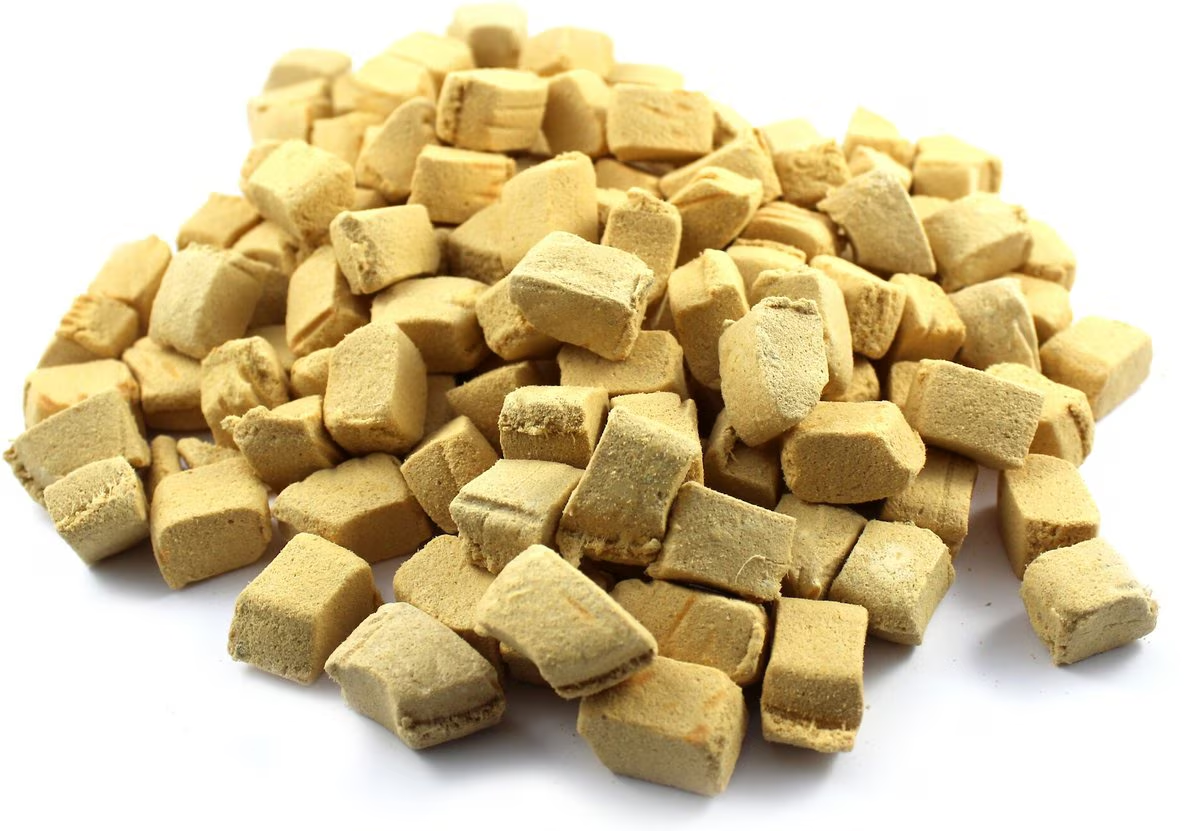
To understand why these products have become so popular, it helps to examine how they are made. Traditional dog biscuits and kibble are manufactured using high-heat extrusion or heavy baking methods. While these processes are fast and inexpensive, high temperatures can alter or diminish the natural vitamins, minerals, and live enzymes found in raw meat.
Freeze-drying, scientifically known as lyophilization, takes a completely different path. The process consists of three main stages:
- Freezing: The raw ingredients, such as whole chicken breast, beef liver, or salmon, are quickly frozen at extremely low temperatures. This solidifies all moisture within the meat.
- Primary Drying (Sublimation): The frozen meat is placed inside a sealed vacuum chamber. The pressure is lowered, and gentle heat is applied. This causes the frozen ice crystals to turn directly into water vapor without turning back into liquid water first.
- Secondary Drying (Desorption): The remaining bound water molecules are removed, leaving a product that has lost roughly 95% to 98% of its original moisture content.
The resulting treat is lightweight, crisp, and completely shelf-stable. Because the structure of the cellular walls remains undamaged, the original appearance, intense natural scent, and nutritional value of the raw food are locked inside. This means dogs receive all the structural benefits of raw meat without any of the mess.
Why Freeze-Dried Dog Treats Are Growing Worldwide: Core Benefits
The rapid global adoption of these premium items is driven by several key factors that directly match modern consumer preferences.
1. Retention of Natural Nutrition
Because the production process avoids high-heat cooking, the primary protein sources do not lose their essential amino acids, iron, and B vitamins. Dogs receive a level of nutrition that closely mirrors a natural, ancestral raw diet. This makes them a superior choice compared to traditional baked goods that rely on artificial nutrient sprays to make up for heat loss.
2. Clean-Label and Single-Ingredient Formulations
Modern pet owners are dedicated label readers. They prefer transparent products with short ingredient lists that are easy to read and understand. A significant portion of freeze-dried snacks contain only a single ingredient, such as 100% pure beef liver or 100% sweet potato. There is no need for chemical fillers, artificial colors, artificial flavors, or synthetic preservatives. The removal of water serves as the natural preservative.
3. High Palatability for Picky Eaters
Dogs rely heavily on their sense of smell to determine what is safe and tasty to eat. Traditional high-heat processing can dull the natural aroma of meat. Freeze-drying retains the original, rich scent and concentrated savory flavor of raw protein. Even the most selective or senior dogs with reduced appetites respond positively to these treats, making them highly effective tools for behavioral training.
4. Safety and Convenience Compared to Raw Feeding
While raw diets are popular for their health benefits, handling raw meat comes with challenges. Raw meat requires constant refrigeration, spoils quickly, and carries risks of bacterial contamination for human family members. Freeze-drying provides the nutritional profile of raw meat in a clean, dry, pantry-safe form. It eliminates the mess of meal preparation and reduces the risk of spoilage, offering great convenience for busy households or travel.
Market Trends Driving Global Growth
The rising demand for these products is supported by distinct economic and demographic shifts in the global marketplace.
The Rise of Pet Humanization
The structural driver behind this market expansion is pet humanization. Millennial and Gen Z owners are delaying parenthood and investing more disposable income into their animals. They want the food their dogs consume to match the standards of human health trends, such as organic, non-GMO, and minimally processed options. Freeze-dried products sit at the pinnacle of this premium tier.
Demand for Exotic and Novel Proteins
As environmental changes and dietary habits evolve, many dogs develop food sensitivities or digestive issues related to common protein sources like chicken or beef. Manufacturers are addressing this by introducing exotic proteins into the freeze-drying lines. Items featuring venison, lamb, rabbit, and wild-caught salmon are expanding quickly, as the low-temperature drying process preserves the delicate fats and proteins found in these specialty meats.
Growth of Commercial Sourcing Channels
As local pet boutiques, regional grocery chains, and large e-commerce platforms expand their premium pet care sections, maintaining a stable supply chain is vital. Independent retailers cannot rely on small-scale production to meet demand. This commercial necessity explains why businesses are securing partnerships for Wholesale freeze dried dog treats. Bulk purchasing allows retailers to protect their profit margins while offering consistent inventory to a growing base of health-conscious shoppers.
Industry Challenges and Solutions
Despite the strong market growth, the freeze-dried pet segment faces specific operational hurdles that businesses must manage carefully.
|
Challenge |
Impact on Business |
Strategic Solution |
|
High Production Costs |
The specialized vacuum machinery requires significant electrical energy and long processing cycles, which raises the final retail price. |
Utilizing high-volume commercial manufacturing and bulk wholesale procurement to lower the unit cost per bag. |
|
Moisture Vulnerability |
Because the product is highly porous and lacks water, it will quickly absorb humidity from the air if left open, leading to a soft texture or spoilage. |
Utilizing heavy-duty, resealable barrier pouches with airtight seals to block moisture entry after opening. |
|
Product Fragility |
The lack of moisture makes the final pieces light and brittle, meaning rough transit can crush the items into powder. |
Using structured, protective outer packaging and gentle automated sorting lines during fulfillment. |
Summary of Global Market Metrics
Recent pet industry data highlights why this category is attracting so much attention from global commercial buyers:
- The global freeze-dried pet treat market is projected to grow at a steady compound annual growth rate of over 8% to 9% over the next several years.
- Online distribution and direct-to-consumer pet subscription models make up more than 40% of the total revenue in this segment, showing that convenience drives modern sales.
- North America currently leads the global market share, while major urban centers across the Asia-Pacific region are showing the fastest growth rates due to rising middle-class disposable incomes.
Final Thoughts
The surge in popularity of freeze-dried pet rewards is not a short-term fad. It represents a long-term evolution in how humans care for their companion animals. By offering real nutritional benefits, natural flavor retention, clean ingredient profiles, and long shelf life, these products provide clear advantages for both pets and their owners.
As the market continues to expand across new regions, the key to success for retail operations lies in sourcing consistent, premium inventory. Securing high-quality Wholesale freeze dried dog treats helps retailers meet consumer expectations for ingredient clarity, build customer trust, and maintain a competitive position in a growing global market.