
Proposed Title Tag: Choosing the Perfect Show Snap Lead for Conformation Proposed Meta Description: Master your conformation ring presentation. Learn how to choose the perfect show snap lead based on breed size, coat color, and handling style.
The margin for error in the modern conformation ring is smaller than ever. Judges have mere minutes to evaluate a dog’s structure, movement, and overall adherence to breed standards. As competition intensifies, a flawless presentation becomes an absolute necessity for anyone looking to bring home a ribbon.
This pressure is amplified by shifting trends within the sport itself. According to Dr. Gerry G. Meisels, total entries in AKC Conformation shows have dropped by nearly 28 percent over the past 20 years. With fewer entries overall, the dogs that do show up are often of exceptionally high quality. Handlers can no longer rely on good genetics alone to stand out in a smaller, highly scrutinized crowd.
Criteria for Choosing the Perfect Show Lead
Handlers must evaluate multiple components of a leash to ensure it meets the specific needs of their dog. A lead that works perfectly for a Doberman Pinscher will be entirely inappropriate for a Pomeranian. You must look closely at sizing, color, hardware, and material to build the ideal setup.
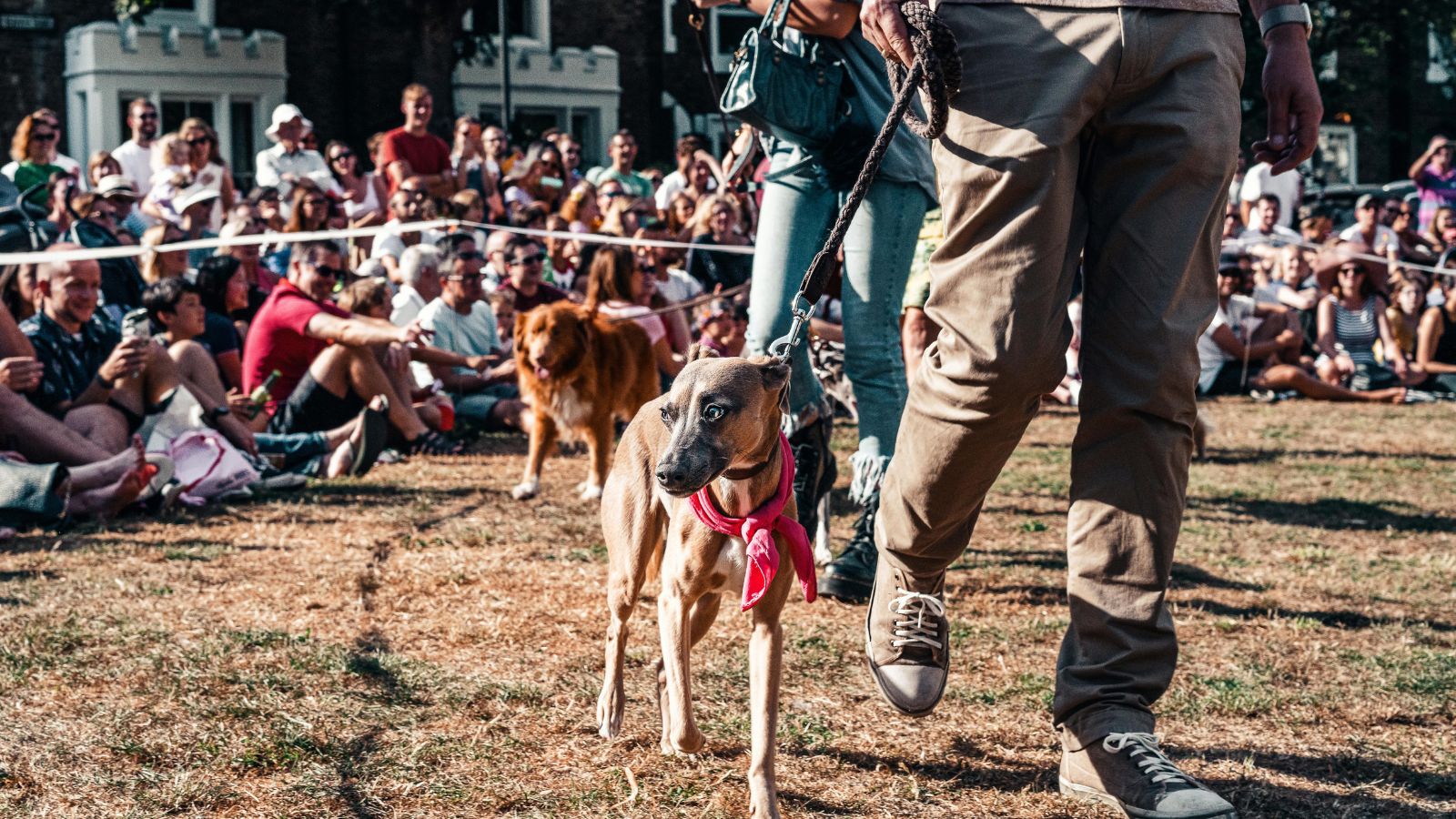
Investing in quality dog show leads ensures you have a reliable, lightweight tool that adapts to any stage of your dog’s career. Whether you are in the ring with a young puppy or a seasoned senior, the simplicity of a strong braided nylon design provides the durability needed for the show environment without the bulk of a standard leash. By choosing the right length and thickness that complements your dog’s coat, you create a polished, professional look that allows you to focus entirely on performance.
Sizing and Proportion (Length and Thickness)
Determining the correct leash length depends primarily on the breed’s size and your specific handling style. You need enough length to gait the dog comfortably without stepping on their paws. Conversely, you do not want so much excess material that you are fumbling with it while trying to free-stack your dog.
As a general rule, smaller breeds require longer leads, while larger breeds require shorter ones. A handler showing a toy breed might need a 6-foot lead to bridge the distance from their hand to the dog’s collar. A handler showing a Great Dane might only need an 18-inch lead to maintain the same level of control and presentation.
Proportion is equally important when selecting the thickness of the lead. A thick leash looks clunky and distracting on a toy breed, completely ruining the elegant lines the judge is looking for. A thin leash might snap under the weight and power of a working breed. You must select an ideal thickness range that maintains a refined look without risking breakage in the ring.
|
Dog Size/Breed Category |
Recommended Lead Length |
Recommended Lead Thickness |
|
Toy and Small Breeds |
4 to 6 feet |
3/16 inch |
|
Medium Breeds |
3 to 4 feet |
1/4 inch |
|
Large and Giant Breeds |
18 to 36 inches |
5/16 inch or thicker |
Aesthetic Harmony (Color Selection)
Selecting the right leash color is a strategic decision that directly impacts how a judge perceives your dog. The primary goal of any handler is to keep the judge’s focus entirely on the dog’s movement, expression, and conformation. Your equipment should fade completely into the background.
Handlers should actively avoid bright, distracting colors like neon green, bright red, or electric blue. These colors draw the judge’s eye upward, away from the dog’s topline and foot timing. A neon leash visually cuts the dog’s neck in half, disrupting the natural silhouette that you worked so hard to groom and present.
The best practice is to use neutral, cohesive tones that seamlessly blend with the animal’s natural aesthetic. Colors like black, white, beige, and brown are staples in the conformation ring. If you have a black dog, use a black leash. If you have a golden retriever, a beige or light brown lead will create the perfect aesthetic harmony.
Hardware for Reliable Control
In high-stakes events, reliable hardware is critical for quick attachments and seamless routines. You only have a brief moment to unclip your dog for an examination or swap collars before re-entering the ring for the final go-around. A sticky, cheap clasp can cause you to fumble, look unprofessional, and potentially lose the judge’s attention.
The specific mechanics of the clip are also vital to your performance. A high-quality chrome-plated swivel bolt snap prevents the leash from tangling while the dog is moving or turning in the ring. When you execute a sharp turn or switch hands during a pattern, the swivel hardware rotates smoothly. This keeps the lead flat and prevents it from twisting up into an unsightly knot.
Durable hardware also offers an excellent lifecycle benefit for serious handlers. When you invest in premium clips and rings, the same familiar lead can be used throughout a dog’s entire career. A leash that survives puppy classes, rigorous training sessions, and senior showings becomes a trusted, reliable tool in your handling kit.
Material and Handler Comfort
Leash material matters just as much for the handler as it does for the dog. Competitive handlers spend long weekends holding leashes, managing strong dogs, and practicing tight turns. This repetition frequently leads to handler leash burn, making soft, gentle materials a strict requirement for professional gear.
Smooth, tightly woven materials like braided nylon or flat leather are ideal for the conformation ring. These materials feel soft against the palm and are incredibly gentle on the dog’s coat. Rough or abrasive materials can catch on fine hairs, causing the coat to break or fray around the neck area where pristine grooming is essential.
Comfortable, distraction-free equipment is also vital for the early stages of a dog’s career. Experts at Purina Pro Club emphasize that dogs lacking early ring training and proper equipment exposure face delayed “look at me” confidence necessary for ribbon consideration. If a puppy is distracted by a stiff, itchy, or heavy lead, they cannot focus on their handler or build the proud carriage required to win.
Professional Handling Techniques
Once you have selected the perfect snap lead, you must know how to hold and manage it correctly. A beautiful, custom-matched leash will still look sloppy if the handler has it bunched up awkwardly in their fist. Proper handling techniques ensure that excess lead length is managed safely while gaiting and stacking.
The most common and effective grip used by professionals is known as the thumb lock. The ASPCA recommends this specific technique: Hold the leash with a “thumb lock” by placing the handle over your thumb so the loop sits in your palm, allowing for quick adjustments. This grip secures the leash firmly to your hand, preventing accidental drops if the dog lunges or spooks.
To manage any excess length hanging down, handlers employ the palm fold technique. After securing the thumb lock, you neatly fold the remaining slack back and forth within your palm, closing your fingers over the folds. This hides the excess material from the judge’s view. It ensures you maintain a clean, professional visual line that never distracts from the dog’s profile.
Conclusion
Flawless ring presentation requires a lead that perfectly matches the dog’s proportions, coat, and the handler’s technique. You cannot simply grab any leash off the shelf and expect it to perform well under the bright lights of a conformation event. The equipment you choose dictates your level of control and directly impacts the visual picture you present to the judge.
The ideal snap lead bridges the gap between elegant show-ring aesthetics and rugged, tangle-free durability. It features proportional sizing, a color that blends flawlessly into the coat, swivel hardware to prevent twisting, and soft materials that protect both the handler and the dog.
Investing in the right, customizable equipment is one of the smartest decisions a competitive handler can make. When you trust your gear completely, you eliminate a major source of ring anxiety. This allows you to focus entirely on your timing, your footwork, and showcasing your dog’s true potential to the very best of your ability.