Your dog asks to go outside four times in an hour. Nothing happens, or almost nothing. That pattern, repeated over a day or two, is one of the clearest early signs of a UTI in dogs. Most owners miss it the first time because it looks like a training issue rather than a health one.
Urinary tract infections affect about 14% of dogs at some point in their lives, making them one of the most common conditions in veterinary practice. Recognizing what a UTI looks like early means a faster vet visit, a shorter recovery, and a dog that gets back to normal sooner.
What Dog UTI Symptoms Actually Look Like
The most obvious signs involve changes in bathroom habits. Frequent urination is usually the first thing owners notice: your dog asks to go out constantly but produces very little each time. The effort does not match the output.
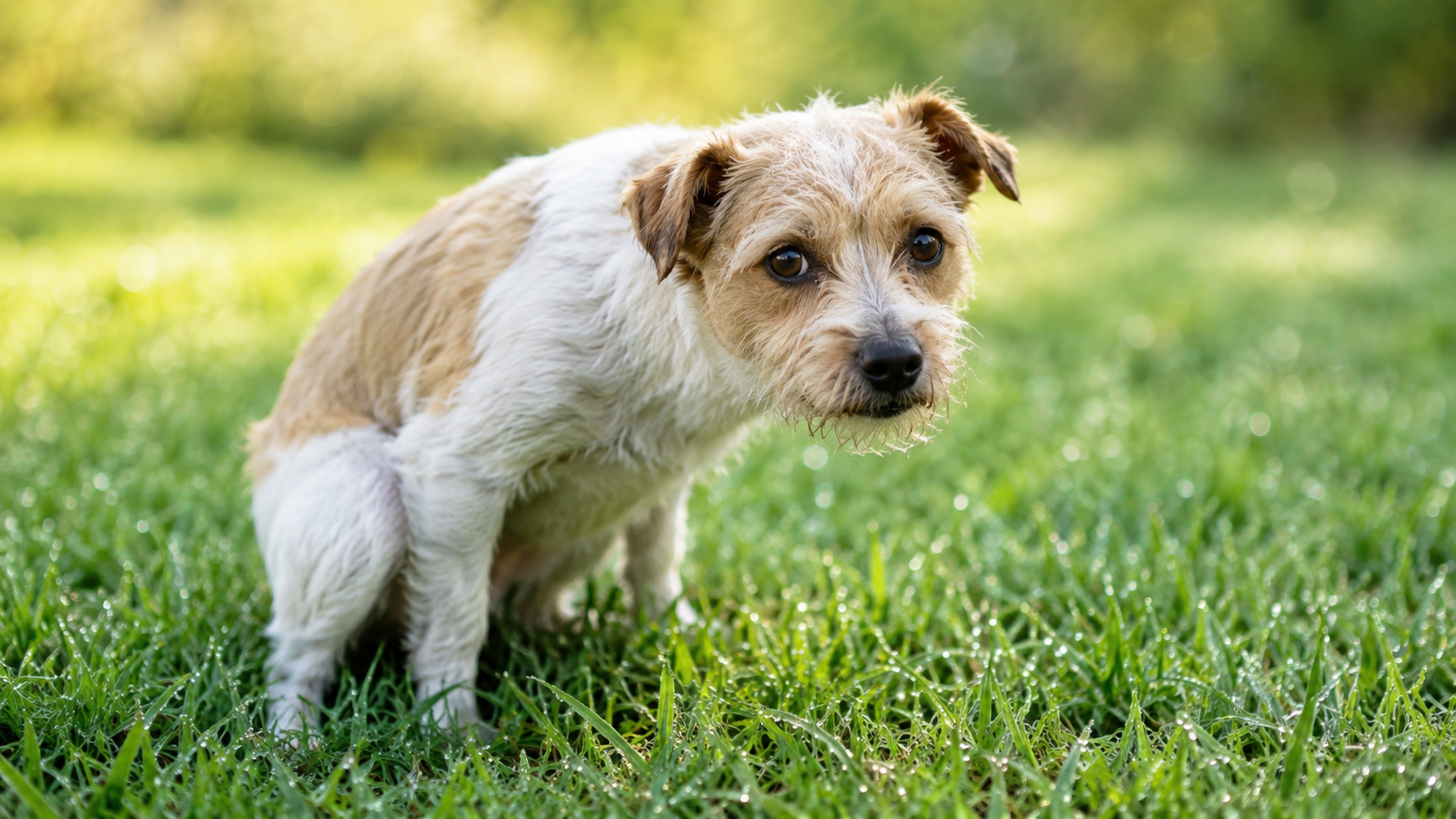
You might also notice straining or visible discomfort while urinating. Some dogs whimper or look back at themselves mid-squat. Others start having accidents indoors after months of reliable house training, not because they have forgotten anything, but because the urge arrives too fast to hold.
Blood in the urine is another sign, though it is not always visible to the naked eye. Cloudy urine or an unusually strong smell can also point to an infection. Behavior changes matter too: restlessness, distraction, or reluctance to settle, especially combined with bathroom irregularities, deserve a closer look.
Common dog UTI symptoms to watch for:
- Asking to go outside more often than usual, producing little or no urine
- Straining, whimpering, or appearing uncomfortable while urinating
- Accidents indoors in a house-trained dog
- Cloudy urine or a stronger smell than normal
- Blood in the urine, even in small amounts
- Excessive licking of the genital area
- Restlessness or difficulty settling
What Makes Dog Care Different
Health issues rarely appear the same way in every dog. Age, sex, breed, and daily routine all shape how symptoms develop and how quickly owners notice them.
UTIs are more common in female dogs than males because the urethra is much shorter in females, and in females the anus is closer to the genitals, making it easier for bacteria to enter the urinary tract.
Middle-aged to older dogs, immunocompromised dogs, and dogs with conditions such as Cushing’s disease, diabetes, or kidney disease are at higher risk. Puppies can be harder to evaluate because irregular bathroom habits are already part of the house-training process.
Breed characteristics play a role too. Small dog breeds have become increasingly popular in cities and apartments, where their size and adaptability fit naturally into everyday life. Yet every breed comes with its own energy level, grooming needs, and health considerations. Understanding these differences helps owners establish realistic routines and recognize changes more quickly.
The key is learning what normal looks like for your dog: how often they drink, how frequently they ask to go outside, their typical energy level, and their bathroom habits. When you know that baseline, subtle changes become much easier to spot early.
How Dog Training Connects to Health Awareness
This connection does not get mentioned often enough. Solid house training and a consistent outdoor routine are genuinely useful health monitoring tools.
A dog with a reliable outside cue and a predictable schedule makes deviations immediately visible. If your dog usually goes twice on the morning walk and suddenly wants to stop six times, that information is useful. A dog whose bathroom habits are inconsistent makes those early signs much harder to catch.
Teaching a dog to toilet in a specific spot, on cue, means you are watching closely every time. That attention is exactly what catches early UTI signs before they escalate.
Recognizing Dog Illness Through Everyday Observation
Recognizing illness early does not require medical training. It requires paying attention to what is normal for your specific dog and noticing when something shifts.
A few things worth tracking as part of a basic wellness routine:
- How often your dog urinates per day
- Approximate volume each time
- Urine color when visible
- Whether your dog seems comfortable or strained during the process
- Changes in water intake
You do not need to obsess over these. A quick mental note on each walk builds a reliable picture over time. Owners who spend structured time with their dogs through training sessions, regular walks, or play routines tend to notice health symptoms faster.
What to Do When You Suspect a UTI
If your dog shows frequent urination, straining, accidents, or any combination of the above for more than 24 hours, a vet visit is the right next step.
UTIs are confirmed through urinalysis, and treatment typically involves a course of antibiotics. After completing the course, rechecking the urinalysis confirms the infection has fully resolved rather than partially cleared.
Taking time to try home remedies delays appropriate care and prolongs the dog’s discomfort. Giving leftover antibiotics or human antibiotics can be ineffective at best and dangerous at worst. While waiting for the appointment, keep fresh water available at all times. Do not restrict water intake to reduce accidents as that slows recovery and adds discomfort.
If a UTI goes untreated, complications can develop including bladder stones or a kidney infection called pyelonephritis. Early treatment prevents the infection from reaching that stage.
PawChamp’s guide on dog UTI symptoms goes deeper than a standard symptom checklist. It explains why so many owners initially mistake a UTI for a house training regression, how to tell the difference between a behavioral accident and a medical one, and why female, senior, and chronically ill dogs need a different monitoring baseline than healthy adults.
The guide also walks through what a urinalysis actually shows, why not every positive result automatically means antibiotics, and what to track between vet visits if your dog has had a recurring infection. For owners who have already been through one UTI and want to catch the next one earlier, that section alone is worth reading.
Key Takeaways
A UTI rarely announces itself loudly. The early signs are quiet, behavioral, and easy to dismiss as a training blip or a bad day. The owners who catch it fastest are the ones who already know their dog’s normal and notice when something shifts.
Frequent urination with little output is the signal most worth acting on. Combined with straining, accidents, or changes in urine smell or color, it warrants a vet visit within 24 hours, not a wait-and-see approach.
The good news: caught early, a UTI is straightforward to treat and fully recoverable. The investment is attention, not expertise. Structured daily routines, consistent walks, and even a basic health log give you exactly the baseline you need to spot the difference between an off day and something worth investigating.