Most dogs don’t fail at training because their owners repeat the same mistakes that trainers have been warning about for decades. A 2025 study published in Frontiers in Veterinary Science confirmed what many professionals have said for years: dogs trained with marker-based positive reinforcement learn obedience commands in fewer repetitions and retain them longer than dogs trained with corrections, and yet the average owner still wings it.
Effective dog training comes down to a short list of basics that most people either skip or apply inconsistently. It means using positive reinforcement with precise timing, keeping cues distinct and unrepeated, matching rewards to difficulty, and practicing in short daily sessions across different environments. Dogs that get this foundation rarely develop the behavioral problems that send owners scrambling for help later.
This article won’t cover advanced behavior modification, reactivity protocols, or off-leash reliability. Those are separate skills that require a different depth of instruction. What you’ll get here are the high-leverage basics, the ones I’ve watched produce the biggest behavior changes across hundreds of dogs in the shortest amount of time.
Your Tone Matters More Than Your Words
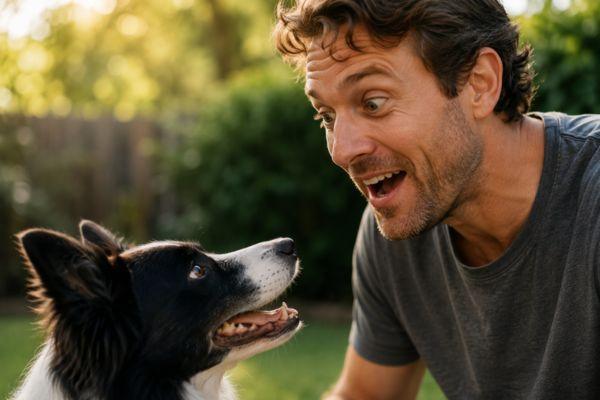
Dogs pick up on vocal pitch and body language faster than verbal cues. Research from a 2024 Applied Animal Behaviour Science paper showed that dogs responded to emotional tone roughly 200 milliseconds before they processed the actual word being spoken. That’s not a small gap. Your dog is reading your mood before you even finish saying “sit.”
This is why a high-pitched, slightly goofy “yes” works better than a flat “good dog.” It’s also why a frustrated “COME” makes your dog run the other way during recall training.
I’ve seen owners completely stall their dog’s progress by delivering rewards in a monotone. The dog technically gets the treat, but there’s no excitement behind it. The dog learns that training is boring, not that training pays off. If you feel ridiculous using a silly voice, that self-consciousness means you’re probably doing it right.
The same logic applies to recall. If you sound like you’re panicking or scolding, you’re telling your dog to stay away. If you sound like you’re throwing a party, and they’ll come running. Your voice is the first training tool you own, so use it like you mean it.
Positive Reinforcement Beats Correction Every Time
The APDT International, IAABC, and Karen Pryor Academy released updated joint standards of practice in November 2025 endorsing LIMA principles (Least Intrusive, Minimally Aversive). They oppose the use of intentional aversive stimuli like shock collars in most training contexts. This wasn’t a fringe position. It’s the consensus of the major professional bodies in the field.
Dogs can read human emotions with surprising accuracy. A study covered widely in 2024 behavioral research showed that dogs differentiate between happy and angry facial expressions, and they adjust their behavior accordingly. When your dog senses frustration, they shut down. What looks like stubbornness is actually stress.
If you catch yourself saying “No” or “Hey” after a mistake, your dog learns that trying is risky. That kills the willingness to experiment, which is exactly what you need when working on behavior modification.
Are You Rewarding Your Dog Enough?
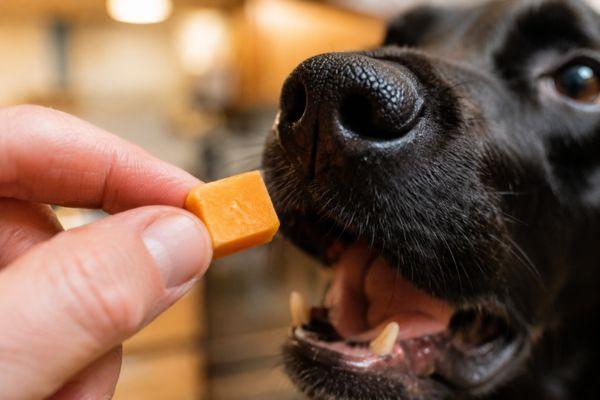
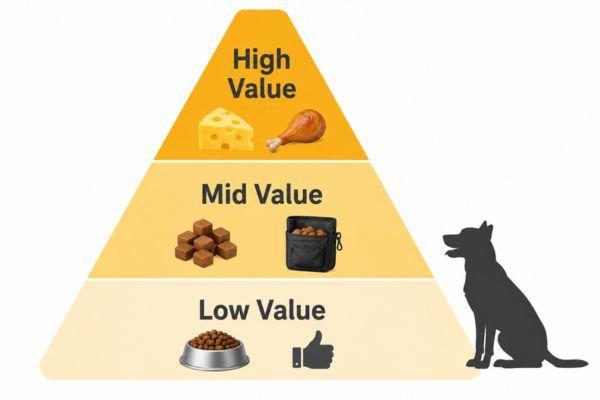
Behaviors that get reinforced get repeated, and it’s a law of learning that applies to every animal, including you. The type of reward matters just as much as the frequency. Some dogs don’t care about kibble when there’s a squirrel nearby. You need high-value rewards for high-distraction environments. Whether it’s cheese, hot dog pieces, or freeze-dried liver, build a reward hierarchy and use the top-shelf stuff when you’re asking for something difficult.
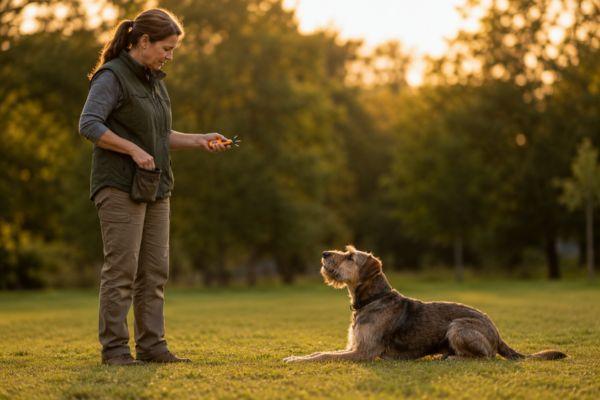
Using a clicker or a verbal marker like “yes” bridges the gap between the behavior and the treat. However, the faster you deliver that reward after the marker, the cleaner the association. Slow reward delivery creates confused dogs who can’t figure out what they did right.
Matching the Reward to the Difficulty
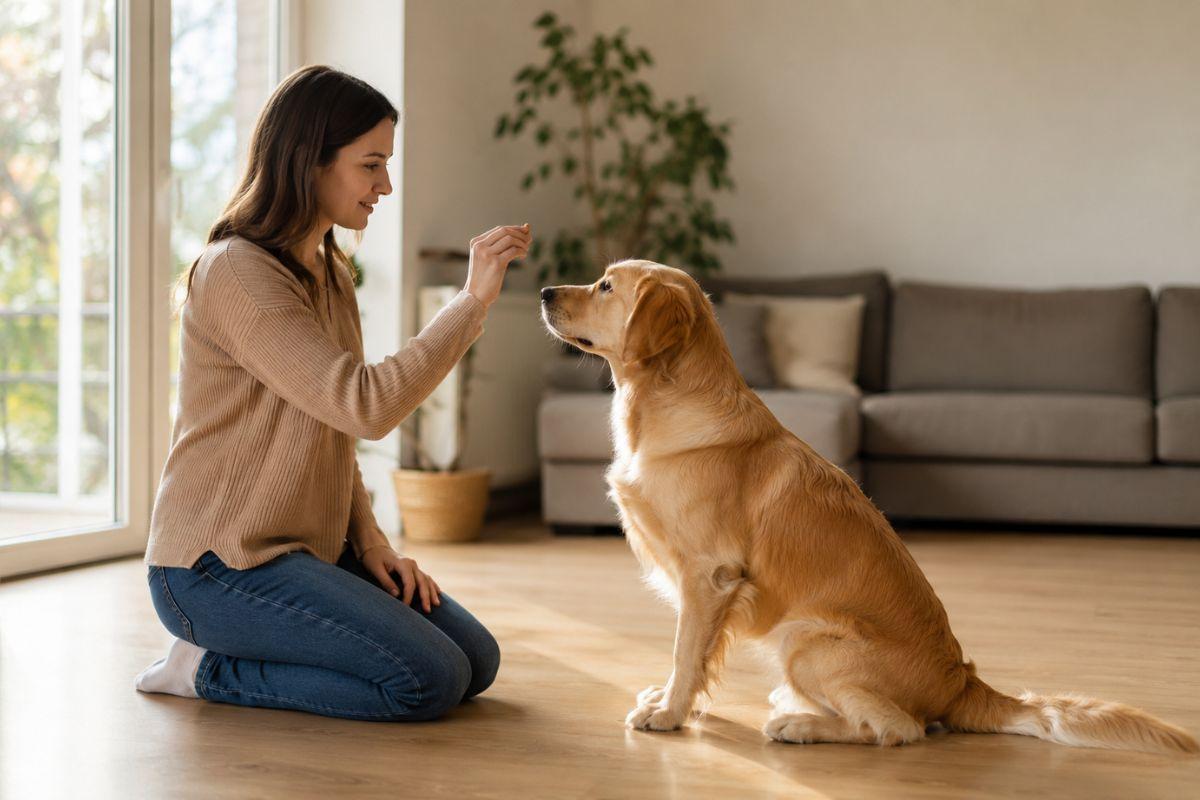
Not all tasks deserve the same payoff. Teaching your dog to sit in your quiet living room is a low-difficulty repetition. That earns a piece of kibble or verbal praise. However, asking your dog to hold a down-stay while someone rings the doorbell is a five-star effort and it deserves a five-star reward.
I’ve watched owners give the same dry biscuit for a basic sit and a complex behavior chain. The dog quickly figures out there’s no incentive to try harder. To combat this, aim to build a hierarchy. Low-value treats sit at the bottom (kibble, generic treats), mid-value in the middle (training treats, small meat pieces), and high-value at the top (fresh cheese, real chicken).
Be sure you don’t skip “life rewards”. Going for a walk, gaining access to the yard, or earning a belly rub are all things your dog wants, and they work as reinforcement when you make the dog earn them. Ask for them to sit before the leash goes on, or for eye contact before the food bowl goes down. This helps to build puppy training habits that pay off for years. Once your dog reliably knows a behavior, you fade to a random reward schedule.
Does Reward Timing and Placement Affect Results?
If you ask your dog to lie down, but they pop back into a sit before you hand over the treat, you’re only reinforcing the sitting. The behavior your dog is doing at the exact moment of reward delivery is the behavior that gets stronger. It doesn’t matter what you intended to reward. It matters what the dog was doing when they got paid.
This is especially true during shaping, where you’re building a behavior in tiny increments. If your timing is off by even a second or two, you might reinforce the wrong step. A clicker helps here because the sound is instantaneous and always identical.
Practice your timing without the dog first. Click (or say your marker) the instant a ball bounces, or the moment someone claps their hands. It sounds silly, but your mechanical skills directly affect how fast your dog learns. Trainers who specialize in competition obedience obsess over this, and it’s one reason their dogs look so polished.
Sending Mixed Signals Without Realizing It
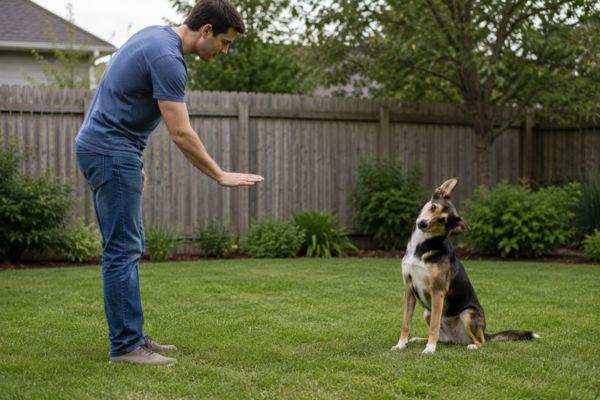
Dogs process your body language, hand gestures, and posture alongside whatever you’re saying. When those signals conflict, the dog goes with the body language almost every time. If you say “stay” but lean forward or take a step backward, your dog reads that as an invitation to move.
Hovering over your dog or leaning into their space creates pressure that many dogs find stressful. This is a bigger problem with fearful or reactive dogs, but it can shut down even a confident dog during training.
Then there’s the issue of similar-sounding cues. If “down” means lie down and “don’t” means stop doing something, those two words sound awfully close to a dog’s ears. The same goes for “wait” and “stay” or “crate” and “great.” You can use any word you want for any behavior, but each cue needs to sound and look different from every other cue. To practice, write down every cue you use, including hand signals, and check for overlaps.
Why Won’t My Dog Listen Outside the House?
Since dogs don’t generalize well. If you teach “sit” in your kitchen, your dog thinks the behavior is “sit in the kitchen.” Take that same dog to a park with squirrels, other dogs, and new smells, and the behavior falls apart.
The fix is simple but time-consuming: practice every cue in multiple locations. Start in your kitchen, move to the backyard, then the front yard, then a quiet park, then a busy sidewalk. Each new environment is essentially a reset, so drop back to basics and re-teach with high-value rewards.
The same principle applies to the three D’s that trainers talk about: distance, duration, and distraction. Train each one separately before combining them. Asking for a 30-second stay at 20 feet away in a busy park is stacking three challenges at once. That’s a recipe for failure unless you’ve built each variable independently. Trainers call this process “proofing,” and skipping it is one of the most common reasons group training graduates fall apart in real-world settings.
Stop Repeating Cues (Your Dog Heard You the First Time)
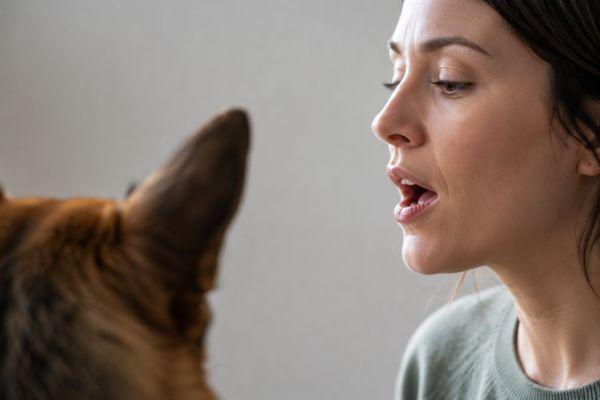
Cue nagging is one of the fastest ways to undermine effective dog training. Every time you repeat a cue, you’re telling your dog they don’t need to respond to the first one. The fix: say the cue once, then wait. If the dog doesn’t respond, get their attention with their name or a “watch me” prompt, then try again.
If your dog is too distracted to respond at all, that’s information. It tells you the environment is too hard for their current skill level. Back up to an easier setting and build from there. Don’t keep shouting the cue louder. Volume doesn’t help when the problem is distraction, not hearing.
Equally damaging is “poisoning” your cues. This happens when you consistently pair a cue with something the dog dislikes. Calling your dog to come right before trimming their nails, or right before leaving the park. After a few repetitions, “come” now predicts something bad. If you need to do something your dog doesn’t enjoy, use a different method. Walk over, clip the leash on, and guide them. Keep your trained cues clean and positive.
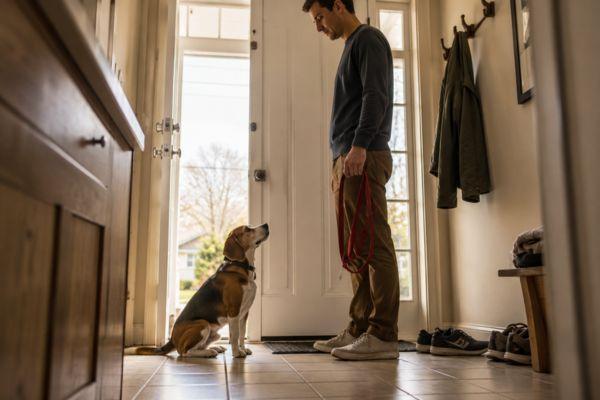
The Daily Habit That Changes Everything
The global dog training services market hit $43.8 billion in 2026 according to Business Research Insights, and the single biggest reason owners spend money on professional training is that they don’t practice at home between sessions.
Most dogs lose focus after 10 to 15 minutes anyway. Five to 10 minutes of focused daily practice produces better results than a single weekly class alone. Owners who need additional structure can combine home practice with professional dog care that supports consistent routines and appropriate training. I’ve tested this across dozens of clients, and the ones who fold training into their daily routine (sit before the leash, down before dinner, a trick before playtime) consistently outperform the ones who only practice in formal sessions.
Daily training also provides mental stimulation, which is something many owners underestimate. A tired brain makes for a calmer dog, and a few minutes of problem-solving can wear a dog out faster than a 30-minute walk. If you’re dealing with excessive barking or restless behavior, structured daily training sessions often reduce both.
Training doesn’t stop once your dog “knows” a behavior. Keep practicing, keep rewarding randomly, and keep raising the bar in small increments. Dogs that work with an experienced training team learn that training is a permanent part of life, not a temporary phase. That mindset shift, in both the owner and the dog, is where effective dog training actually starts paying off.
Frequently Asked Questions
How long does it take for effective dog training to show results?
Most dogs pick up basic commands like sit, down, and stay within two to four weeks of consistent daily practice. The 2025 Frontiers in Veterinary Science marker training study found that dogs trained with clicker methods required roughly 30% fewer repetitions per cue than dogs trained without markers. Puppies and adolescent dogs may take longer because impulse control is still developing. The biggest variable isn’t the dog. It’s whether the owner practices between sessions.
What is the most common mistake people make during dog training?
A 2024 APDT International survey of professional trainers identified owner inconsistency as the number one reason dogs regress after training classes. This means changing rules day to day (allowing a behavior Monday, correcting it Tuesday), skipping home practice, or having different family members enforce different standards. Pick rules, stick to them, and make sure every person in the household follows the same plan.
Does positive reinforcement really work better than correction-based training?
Multiple studies published in Applied Animal Behaviour Science between 2020 and 2025 show that dogs trained with positive reinforcement display fewer stress signals, learn faster, and maintain behaviors longer than dogs trained with aversive methods. The IAABC, APDT International, and CCPDT all endorse reward-based, LIMA-aligned practices as the professional standard.
How many minutes a day should I spend on effective dog training?
Five to 10 minutes per session is the sweet spot for most dogs. Some high-drive breeds can handle 15 minutes, but attention drops off quickly after that. Short, focused sessions produce better retention than long, unfocused ones. Folding training into daily routines (asking for a sit before meals or a down before walks) adds repetitions without requiring dedicated time blocks.
Why does my dog know a command at home but ignore it at the park?
Dogs don’t generalize behaviors across environments the way humans do. A dog taught to “sit” in the kitchen genuinely believes the cue only applies in the kitchen. You have to re-teach in multiple locations, starting with low-distraction settings and gradually increasing difficulty. Trainers call this “proofing,” and it’s the step most owners skip. Roughly 62% of the global pet training services market is driven by dog owners according to Market.us, and generalization failures are a primary reason people seek professional help.
What’s the best type of treat to use for dog training?
For easy behaviors in quiet environments, kibble or low-value treats work fine. For high-distraction settings or new commands, use high-value options like real chicken, cheese, or freeze-dried liver. Build a three-tier reward hierarchy and match the value to the challenge.
Should I use a clicker or a verbal marker for dog training?
Clickers produce a sharper, more consistent sound that creates a cleaner association between behavior and reward. Verbal markers like “yes” are more convenient since you don’t need to carry a device. The 2025 Frontiers in Veterinary Science study found that marker-trained dogs (clicker or verbal) outperformed non-marker-trained dogs regardless of marker type. Pick whichever method you’ll use consistently.