
There are few gifts in life as rewarding as owning a dog, and we Australians definitely know it. Approximately 49% of Aussie households own at least one dog, and out of the 31.6 million pet animals present in our country, no less than 7.3 million of them are dogs. And who can blame us? Dogs are not just animal buddies that can be close to us in the most important moments of our lives. They are, for a good reason, considered to be mankind’s best friend, and our evolution as a species is intertwined with their companionship.
Dogs can reduce depression symptoms; they are an outlet we can utilise to become more active, and let’s face it, they are just the most adorable bundle of joy one can ask for. You love your small fluffball and he loves you back. That said, your pet ownership journey will not always be smooth sailing. Sure, your adorable fluffball fills your days with moments of love that you will remember for the rest of your life. But when they are young, dogs can be a handful and pose issues that are typical of all small pets.
Do you like that rug in your living room? It will be a shame if someone, not naming who, were to have a little accident on it. Likewise, do you like your kitchen’s wooden floors? Well, in that case, you should perhaps consider investing in a humidity-resistant treatment. Puppies are adorable, but in the first months of life, they will not have the greatest control over their bodily functions and therefore, they will be prone to potty accidents. Do you want to reduce their impact? In that case, you should consider visiting your local pet shop and purchasing a couple of puppy training pads.
What Are the Benefits of Training Pads?
First of all, pet shop-available puppy training pads are an absolute necessity in the first few months of your pup’s life. We would all like to own a dog that’s already potty trained and that can let us know when its bodily functions require an outside walk. But, at least in the first three to six months of life, puppies have weak control over their bladder muscles, and therefore, it will be crucial to provide them with an indoor designated space in which they can relieve themselves. Training pads, as the name suggests, have a dual purpose. First, they are, of course, a great way to keep your floor and carpets clean and reduce the impact of occasional potty accidents.
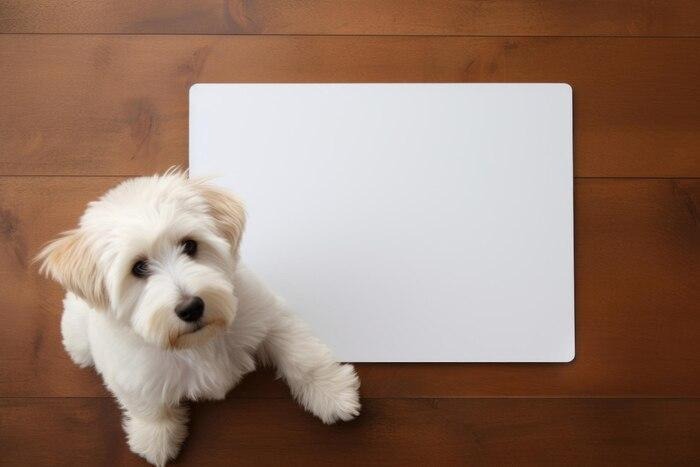
But secondly, training pads represent a way to instil a routine in your pup, and reduce the total effort required to make your dog fully potty trained. Training pads are absorbent, they are perfect for individuals living in small apartments and they are necessary in order to teach your dog where he is allowed to relieve himself. Plus, the use cases of puppy training pads are not just limited to young dogs. Are you the owner of a senior dog that has recently had issues with bladder control? If so, pads can be a way to reduce his discomfort in the later stages of his life. Likewise, training pads are a good accessory to have when travelling, as they are relatively affordable and are available for purchase either online or from your local pet shop.
What Training Pads Can You Purchase?
Your local pet shop has a plethora of different training pads to choose from, and what is suitable for your dog will depend on his current age, size and of course your training goals. Your pup is in the first six months of life, and you are looking to utilise the puppy training pads only as transitory accessories until he is fully potty trained? In that case, the best and most popular market-available solution is to utilise single-use pads made of leak-proof materials. These types of training pads are convenient, cheap and widely available. However, they should be phased out relatively quickly, as prolonged dependence on their use cases could confuse your pup and make him less likely to fully adapt to outdoor potty training.
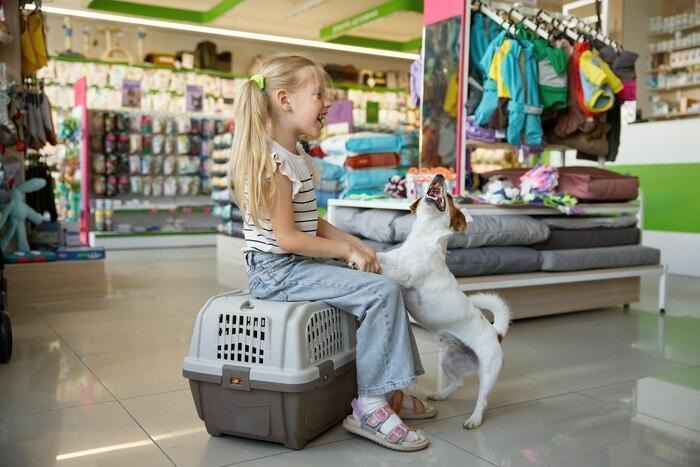
Are you looking for something that can be utilised long-term? If so, you could go for washable pads, which are designed to be fully reusable. Cost-wise, even though they will be more expensive at first, their reusability makes these types of pads a more wallet-friendly option. But, they will be a bit messier. You could also opt for pads that resemble real grass and that can help transition your puppy to grass pottying. That said, whether you go for reusable or single-use pads, the most important thing is to go for ones whose dimensions are suitable for the needs of your small but still-growing pup.
What Size Should I Choose?
Are you the owner of a small breed like a Pomeranian or a Dachshund? In that case, a 45×60 cm pad would be enough. Do you own, however, a Husky or Golden Retriever pup? If so, you will need to take into consideration your fluffball’s growing potential. At first, a 45×60 cm pad will be enough, but eventually you will want to transition towards ones with a dimension of at least 60×90 cm. As for how long you will need them, it really depends on the breed and how well you do to potty train your puppy. That said, as a general rule, most dogs should no longer need puppy pads in a maximum of eight months.
Small breeds will typically require more potty training, as their bladder are smaller and they will require more potty breaks. Large breeds, on the other hand, can typically transition off pads in fewer months, but how long it actually takes will depend on your access to outdoor spaces, the consistency you exhibit in the training routine, and, of course, the environment in which you live. Puppy training pads are a necessary accessory for the proper development of your small dog. That said, even though they will be available from your local pet shop and be relatively cheap, pads should be gradually phased out, as after a certain while, they will only be a hindrance to the process of fully training your dog for outdoor pottying.