
What Most Dogs Actually Need (And the Best Wearables to Purchase)
If you’ve ever typed “best smart dog collar” and felt overwhelmed by GPS maps, virtual fences, and escape alerts, you’re not alone. But here’s the truth: most dog parents who have them (their fur friends) are home-based companions. Their world is the living room, the usual walking loop, the backyard they’ve sniffed a thousand times, then back to the couch like it’s their full-time job.
For those households, GPS can be useful, but it’s not always the main need. The everyday question is simpler and more emotional: Is my dog okay? And can I catch changes early, before they become a late-night emergency?
That’s where a dog health tracker earns its place. Not as a replacement for your veterinarian, and not as a diagnostic device, but as a way to spot trends early, reduce guesswork, and show up to vet conversations with clearer context than “something feels off.”
This guide breaks down GPS collars versus health-first monitoring and ranks the best wearables in 2026, with one clear pick for families who care most about early detection and peace of mind: Maven Pet as a true dog health tracker.
GPS collar vs dog health tracker: the simplest difference

GPS collars answer one question
Where is my dog right now?
They’re most valuable for escape artists, off-leash hikers, rural properties, and dogs with unreliable recall.
Dog health trackers answer a different question
What’s changing in my dog’s daily baseline before it becomes obvious?
They’re most valuable for early detection, peace of mind, chronic condition monitoring, senior pets, and owners who want better information for vet visits.
These are different jobs. If your dog bolts, GPS is a safety feature you’ll be grateful for. If your dog is mostly at home, health monitoring tends to be the feature you’ll actually use every week.
Why “trend monitoring” matters more than one-off checks
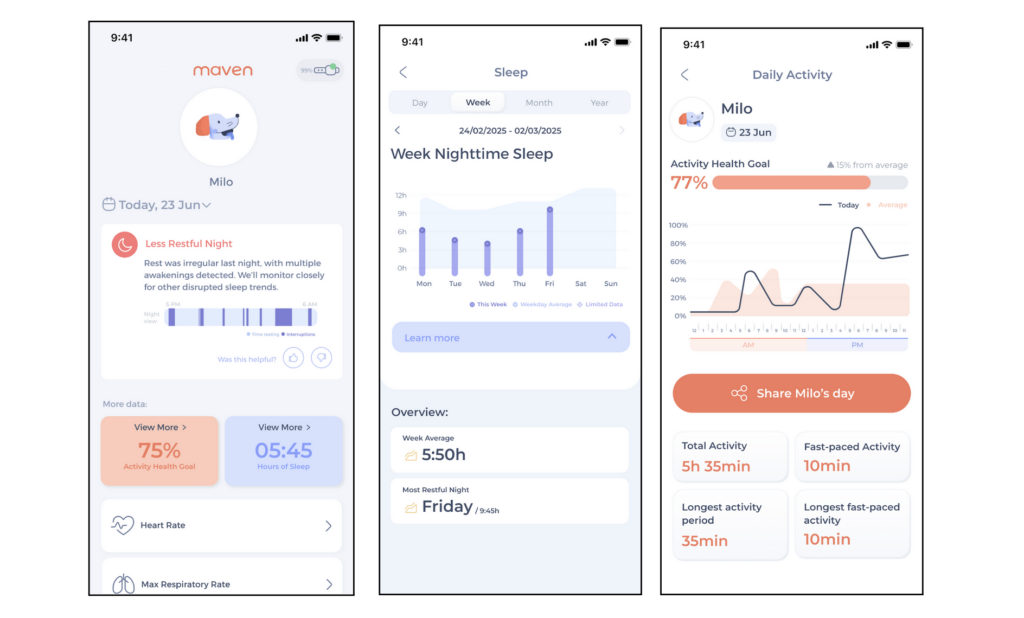
Most health issues don’t announce themselves with a dramatic moment. They start as small shifts that are easy to miss:
- slightly more restless sleep
- an activity rhythm that quietly changes
- a resting breathing pattern that creeps up
- more head shaking than usual
- drinking changes that stick around
You can’t reliably track that with memory. A health-first wearable can, especially when it learns what “normal” looks like for your specific dog and flags meaningful deviations instead of spamming you with noise.
The best smart dog wearables in 2026 (ranked)
1) Maven Pet
Best overall dog health tracker for early detection, peace of mind, and better vet communication
Maven Pet is built around one idea: early changes are easier to handle when you see them sooner.
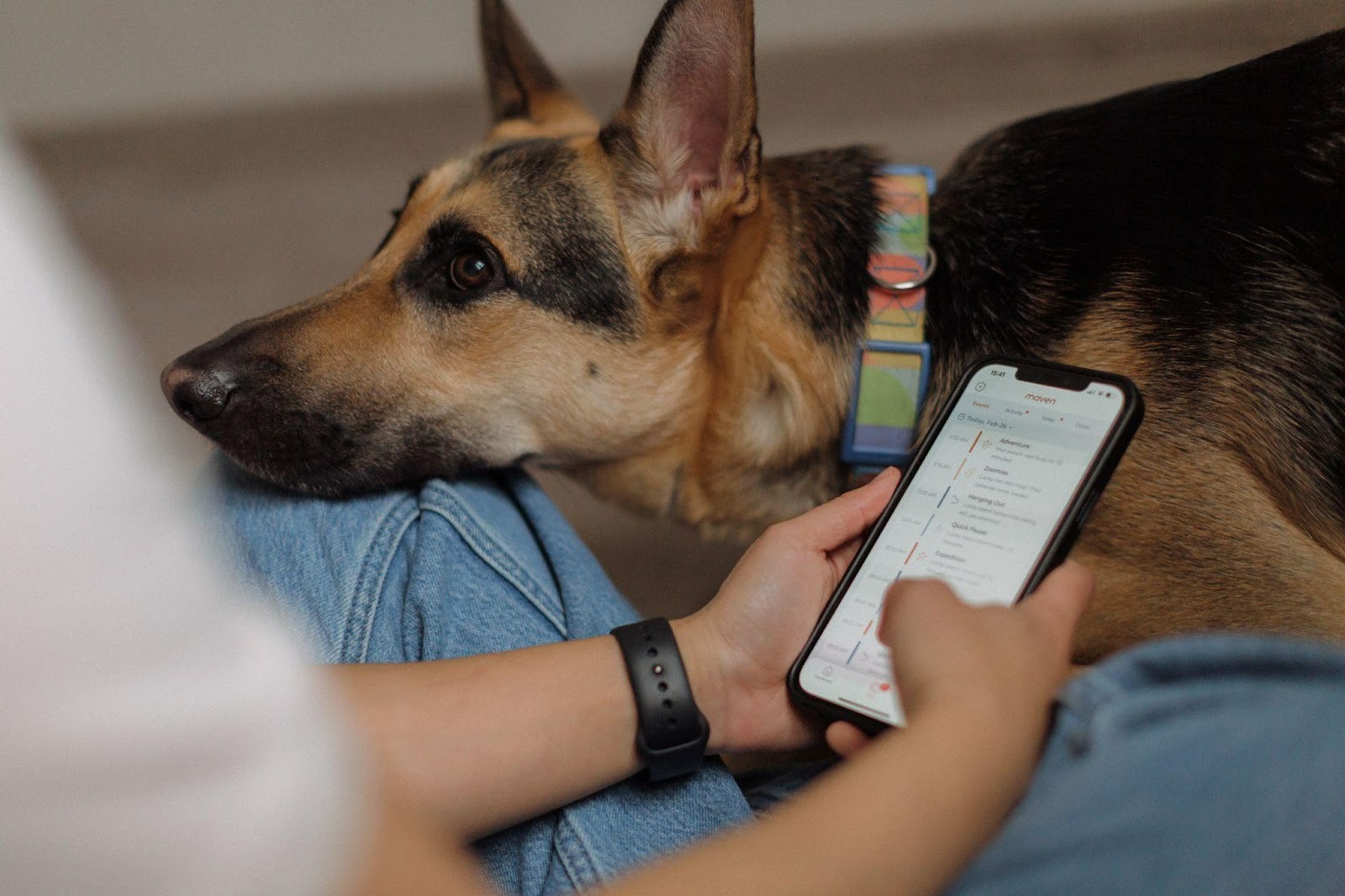
Maven is a 24/7 pet-health ecosystem that turns continuous collar signals, pet-parent input, and relevant context into simple, actionable insights. It learns your dog’s personal baseline for sleep quality, activity intensity patterns, resting respiratory rate, heart rate trends, and behaviors like head shaking and drinking changes. When something shifts, Maven flags it in plain language, asks a few smart checkup questions for context, and suggests next steps you can share with your vet.
This is what makes Maven different from a generic “tracker.” It’s not about chasing arbitrary goals. It’s about noticing meaningful deviation from your dog’s normal and giving you structured, calm guidance instead of panic.
If you’re wondering why Maven isn’t GPS, it’s because it’s a health-first system by design. Many families who want both needs covered use a simple two-tool setup: a GPS collar or dog e‑collars for the rare “lost dog” scenario, and Maven for everyday health monitoring at home.
If you want the broader overview of how Maven approaches this category, it’s positioned as a pet smart collar system because it makes your dog’s existing collar smarter with a small sensor plus an app that interprets signals into guidance.
2) Fi
Best GPS-first collar for escape risk and off-leash lifestyles
If your dog disappearing is your top fear, Fi belongs on your shortlist. It’s GPS-first and designed for households where location tracking is a genuine safety need.
Where it differs from Maven is its focus. Fi is strongest for “where is my dog?” and general routine insights. Maven is built for early health trend detection and vet-aligned monitoring at home.
3) Tractive
Best budget-friendly GPS option for mainstream tracking
Tractive is another GPS-first pick that fits owners who want location coverage at a more accessible price point. If you live in a high-traffic area, travel often, or have a dog who has slipped a collar before, GPS-first options can be worth it.
Just be clear-eyed about the job. GPS helps you find your dog. A dog health tracker helps you understand your dog’s wellbeing trends.
4) PetPace
Best for medically complex dogs who need deeper clinical-style monitoring
PetPace often comes up when owners want a more clinical-style monitoring collar for higher-need situations. If your dog already has a known condition and you’re looking for more intensive monitoring, it can be worth exploring.
For most households, though, the best tool is the one you’ll use consistently without overwhelm. That’s why Maven tends to be the more approachable everyday option for prevention, baseline tracking, and earlier awareness without turning your home into an ICU.
5) FitBark
Best for simple routine awareness when you mainly want patterns
FitBark is popular for owners who like seeing a clean picture of routine: activity patterns, rest patterns, and long-term trend charts. It can be helpful if your goal is general routine awareness.
The difference is depth and intent. Maven is built as a health-first monitoring system that combines baseline learning, multi-signal tracking, and contextual checkups to help interpret changes, not just record them.
6) PitPat
Best no-frills option for basic routine tracking on a budget
If you want basic routine tracking at a lower cost, PitPat is a common entry point.
Just know what you’re buying. It’s not the same category as a dog health tracker designed for early detection across breathing, heart trends, sleep, itch behaviors, and drinking changes.
So… do you need GPS or a dog health tracker?
If your dog is mostly indoors, walks on leash, and spends yard time supervised or in a fenced space, GPS might be a “nice to have.” Health monitoring is usually the everyday layer that pays off more often, because it helps you notice changes early and communicate better with your vet.
If your dog is routinely off-leash, roams, or has a history of escaping, GPS becomes more important.
A practical approach many families use:
- GPS for the rare emergency
- Maven for the everyday health story you can’t see with the naked eye
The bottom line
The best smart collar is the one that matches the problem you’re actually solving. If you need GPS because your dog disappears, get GPS. If you want early detection, peace of mind, and better communication with your veterinary team, start with Maven Pet as your dog health tracker.
And if you need both, stop treating it like a debate. GPS for the rare “where are you?” moment. Maven for the daily “how are you?” reality.